


Falls in Hamilton’s Shopping Centers: Suing Negligent Property Owners
Request a Free ConsultationSlip and fall lawyers in Hamilton, NJ, often hear the same frustrating response from injured shoppers: “The store says they didn’t know about the spill.” Property owners and managers frequently use this defense to avoid responsibility after falls at shopping centers along Route 130 and Route 33. However, a store’s “we didn’t know” explanation is not the end of the story. In New Jersey, liability often turns on whether the business had actual notice of the hazard or whether it existed long enough that the business should have discovered it, a concept called constructive notice. In some self-service settings, the “mode of operation” rule may also apply.
Falls at grocery stores, big-box retailers, and strip malls throughout Hamilton Township happen for predictable reasons. Wet floors go unmarked. Parking lot ice remains untreated for hours. Broken tiles create trip hazards that employees walk past daily. When property owners fail to address these conditions within a reasonable time, injured visitors may still have a claim even if no one saw the hazard form, though they typically need evidence showing the business knew about it or should have discovered it in time.
Key Takeaways for Hamilton Shopping Center Fall Claims
- Property owners may be liable even without actual knowledge of a hazard if the dangerous condition existed long enough that reasonable inspection would have discovered it, a concept called constructive notice.
- The duration a hazard existed often determines liability, not whether a specific employee saw it, making physical evidence and surveillance footage critical to these claims.
- Multiple parties may share responsibility for falls in shopping centers, including the store tenant, property owner, and management company, depending on where the fall occurred.
- New Jersey allows recovery even when injured shoppers share some fault, though the amount decreases proportionally and recovery is barred if the shopper’s fault exceeds 50 percent.
- The two-year statute of limitations creates a deadline for filing personal injury lawsuits in New Jersey, though gathering evidence quickly strengthens claims.
How “We Didn’t Know” Fails as a Defense
The most common response injured shoppers receive after a fall is some version of “we had no idea that was there.” Store managers and property owners offer this explanation as if it ends the conversation. New Jersey premises liability law tells a different story.
Liability does not require proof that a specific employee saw the hazard. The legal concept of constructive notice holds property owners responsible when conditions existed long enough that reasonable care would have revealed them.
What Constructive Notice Means
Constructive notice applies when a hazard was present for a sufficient period that a property owner exercising reasonable care would have discovered and addressed it. The property owner does not need to have actual knowledge. The question becomes whether they should have known.
Courts evaluate constructive notice based on circumstantial evidence. A puddle with dried edges suggests it sat for extended periods. Dirty footprints or shopping cart tracks through a spill indicate time passed while customers navigated around it. Ice that formed overnight remained dangerous through morning business hours.
Physical Clues That Establish Duration
Certain physical characteristics of hazards suggest how long they existed. These details matter because they connect the condition to the property owner’s failure to discover it through reasonable inspection.
Evidence that may establish constructive notice includes:
- Liquid spills with partially dried edges or sticky residue indicating evaporation over time
- Dirt, debris, or footprints tracked through the hazard showing customer traffic passed through it
- Ice formations consistent with overnight freezing rather than recent temperature drops
- Trash or products scattered on the floor in patterns suggesting accumulation
- Discoloration or staining around the hazard area
This type of evidence helps establish that the condition existed long enough for reasonable inspection to have found it.
Who Bears Responsibility in Shopping Center Falls
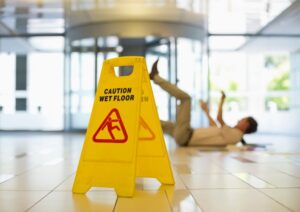 In shopping centers in Hamilton Township like Hamilton Marketplace and Independence Plaza, multiple parties may share responsibility for visitor safety. Determining which party owes a duty to the injured person depends on where the fall occurred and what caused it.
This complexity sometimes benefits injured shoppers because multiple insurance policies may apply. It also creates confusion about where to direct claims.
Store Tenant vs. Property Owner
Retail tenants typically bear responsibility for conditions inside their leased spaces. A grocery store that fails to clean up a spill in the produce aisle generally faces liability for falls in that location. The store controls daily operations and maintenance within its four walls.
Property owners and management companies typically bear responsibility for common areas. Parking lots, sidewalks, entrance walkways, and shared corridors fall under their control. When ice accumulates in a shopping center parking lot, the owner or management company responsible for snow removal may face claims.
Lease Agreements and Maintenance Duties
Commercial leases often allocate maintenance responsibilities between landlords and tenants. Some agreements require tenants to maintain entrance areas or portions of adjacent sidewalks. Others place all exterior maintenance on the property owner or a management company.
These agreements affect which party bears legal responsibility, though injured shoppers do not have to untangle these arrangements before pursuing claims. Discovery during litigation typically reveals which parties controlled the area where the fall occurred.
Common Hazards in Hamilton Retail Locations
Falls at Hamilton Township shopping centers frequently follow recognizable patterns. The same types of hazards appear repeatedly across different stores and properties. Recognizing these patterns helps injured shoppers understand their situations.
Retail environments create specific risks that responsible property owners must address through inspection and maintenance protocols.
Interior Store Hazards
Inside retail locations, liquid spills cause many falls. Broken containers in grocery aisles, leaking refrigeration units, and tracked-in rainwater create slippery surfaces. Produce sections present particular risks as fruits and vegetables fall and get stepped on.
Other interior hazards include:
- Uneven flooring transitions between different surface materials
- Torn or bunched floor mats that create trip points
- Merchandise or boxes left in aisles during restocking
- Damaged tiles, torn carpet, or cracked flooring
- Extension cords or equipment left in walkways
Each hazard type requires specific responses from property owners. Failure to address known categories of risk may support negligence claims.
Parking Lot and Exterior Conditions
Parking lots and exterior walkways are common places for falls, especially during icy or rainy conditions. Hamilton’s winter weather creates ice hazards that demand prompt treatment. Rain creates slippery conditions near entrances where water accumulates.
For snow and ice, duties depend on timing. In many cases, a commercial property owner’s obligation is evaluated after the precipitation ends and a reasonable amount of time passes, consistent with New Jersey’s “ongoing storm” doctrine. Specific facts and exceptions may change that analysis, but property owners generally must address ice accumulation within a reasonable period once conditions allow. Maintenance of potholes, uneven pavement, and adequate lighting in parking areas also falls within property owner responsibilities.
Evidence That Makes or Breaks These Claims
Evidence collection happens quickly after falls, whether the injured person participates or not. Stores often preserve surveillance footage initially but may overwrite it within days. Cleaning logs exist at the time of the fall but may become unavailable later. Acting promptly to preserve evidence significantly strengthens claims.
The evidence that matters most connects the hazard to the property owner’s failure to exercise reasonable care.
Surveillance Footage and the Race Against Deletion
Security cameras cover most retail spaces and many common areas in shopping centers. This footage may show how long a hazard existed before the fall. It may capture employees walking past without responding. It may reveal the absence of inspection rounds during relevant time periods.
Footage preservation requires prompt action. Many systems automatically overwrite recordings within 7 to 30 days. A written preservation request sent to the property owner shortly after the fall helps prevent deletion. Once footage disappears, reconstructing the timeline becomes far more difficult.
Maintenance Records and Inspection Protocols
Retail operations typically maintain logs documenting cleaning schedules, inspection rounds, and hazard responses. These records reveal whether the property owner followed their own safety protocols. A store that claims to inspect aisles every 30 minutes but has no documentation faces credibility challenges.
Records that may support claims include:
- Cleaning and mopping logs showing inspection frequency and timing.
- Incident reports documenting the fall and immediate response
- Prior complaints about similar hazards at the same location
- Weather service records establishing when freezing conditions began
- Employee schedules showing staffing levels during relevant periods
This documentation helps establish what the property owner knew or should have known about the hazardous condition.
Responding to Blame-Shifting Tactics
 Property owners and their insurers frequently respond to fall claims by questioning the injured person’s conduct. They may suggest the shopper was distracted by a phone, wearing inappropriate footwear, or moving too quickly through the store. This response attempts to shift focus away from the property owner’s maintenance failures.
These arguments do not automatically defeat claims. New Jersey law recognizes that multiple parties may share responsibility for an incident.
When Shoppers Share Some Responsibility
Under N.J.S.A. 2A:15-5.1, New Jersey uses a modified comparative fault system. An injured shopper who bears some responsibility for a fall may still recover, but the recovery decreases by their percentage of fault. Recovery is barred entirely only if the shopper’s fault exceeds 50 percent. In most slip and fall cases against one property defendant, that works out to a straightforward rule: you are barred only if you are more than 50 percent at fault.
A shopper found 25 percent responsible for a fall recovers 75 percent of their damages from a property owner found 75 percent responsible. The calculation matters, but partial fault does not end the analysis.
Visibility of the Hazard
Property owners often argue that hazards were visible and the injured person should have avoided them. New Jersey courts evaluate these arguments based on specific circumstances. A spill in a busy aisle where shoppers focus on merchandise differs from an obvious hazard in an empty corridor.
Factors like store lighting, visual distractions, and the nature of the hazard all affect how courts evaluate these claims. A spill that is the same color as the surrounding tile presents different visibility questions than a bright liquid pooled in contrast to its surroundings.
Injuries From Retail Falls and Their Documentation
Falls on hard retail surfaces sometimes produce significant injuries. Shopping center falls frequently involve elderly visitors who face higher risks of serious harm. Medical documentation creates the foundation for connecting injuries to the fall and establishing damages.
Fractures and Orthopedic Injuries
Hip fractures, wrist fractures, and ankle injuries occur frequently in shopping center falls. Older adults face particular fracture risks due to bone density changes. These injuries often require surgery and extended rehabilitation and may produce lasting limitations.
Orthopedic injuries generate clear medical documentation. X-rays and surgical records create objective evidence of harm. Treatment records establish the connection between the fall and the resulting medical needs.
Soft Tissue Injuries and Delayed Symptoms
Soft tissue injuries like sprains, strains, and torn ligaments result from falls even when bones remain intact. Head injuries occur when falls result in impact with shelving, displays, or the floor. Some injuries produce symptoms that develop gradually over hours or days following the initial trauma.
Seeking prompt medical evaluation after a fall creates documentation even when initial symptoms seem minor. This record helps counter arguments that injuries resulted from something other than the fall.
FAQ for Shopping Center Slip and Fall Claims
What if the store filled out an incident report but gave me nothing?
Incident reports belong to the store, and they typically do not provide copies to injured customers immediately. However, these reports become discoverable during litigation. The report documents the store’s initial account of what happened, which may differ from positions they take later.
Does it matter if another customer caused the spill?
The identity of who created the hazard matters less than how long it existed before the fall. Property owners bear responsibility for discovering and addressing hazards regardless of their source. A spill caused by another customer that sat unaddressed while employees worked nearby still supports constructive notice arguments.
What if no one saw me fall?
Witness testimony helps but is not required. Surveillance footage may capture the fall. Medical records documenting treatment for fall-related injuries provide evidence. The physical condition of the hazard itself may establish constructive notice regardless of whether anyone observed the actual fall.
How do winter weather claims differ from indoor spills?
Ice and snow cases involve additional considerations. Under New Jersey’s ongoing storm doctrine, property owners generally receive reasonable time after precipitation ends to address accumulation. Ice that forms overnight and remains untreated through business hours the next morning may support constructive notice arguments. Weather records help establish timelines, and specific circumstances may affect how courts apply these rules.
What if the shopping center has since fixed the hazard?
Subsequent repairs do not eliminate claims for injuries that already occurred. Evidence rules generally prevent using repairs to argue that the property owner admitted fault. Photographs and witness accounts from before repairs document the condition that caused the fall.
A Fall at the Store Does Not Mean You Were Careless

Richard Grungo Jr., Esq., Personal Injury Lawyer
When a store manager suggests you should have watched where you were going, the implication stings. Many Hamilton Township residents leave shopping centers after falls feeling embarrassed rather than injured. They accept the store’s framing and never explore whether the property owner failed to maintain safe conditions.
New Jersey law places responsibility on property owners to discover and address hazards through reasonable inspection. When they fail, injured shoppers may pursue compensation for medical expenses, lost wages, pain, and other harm the fall caused.
Personal injury lawyers at Grungo Law help injured shoppers throughout Hamilton Township evaluate whether property owner negligence contributed to their falls. Our team works to obtain surveillance footage before deletion, examines maintenance records, and helps clients fight for fair compensation when the evidence supports their claims.
If you fell at a Hamilton Marketplace store, Independence Plaza, or another Mercer County shopping location, contact Grungo Law for a free consultation. We handle premises liability cases on a contingency basis, which means you pay no attorney fees unless we recover compensation.