

Injured in a Rural Area? The Challenges of a “Low Evidence” Accident Scene
Request a Free ConsultationCrashes on back roads throughout Cumberland County frequently happen without witnesses, traffic cameras, or street lighting. Many injured drivers assume that without someone who saw the collision, they have no way to support their version of events.
This assumption overlooks how accident claims actually work. Physical evidence tells a story that witnesses often miss or misremember. Vehicle damage patterns, roadway marks, and debris fields all provide information about what happened. When traditional evidence is limited, scientific analysis and reconstruction methods may fill the gaps that worry injured drivers most.
Key Takeaways for Rural Road Accident Claims
- Lack of witnesses does not mean lack of evidence, as physical damage, roadway marks, and debris patterns often reveal what happened during a collision.
- Accident reconstruction relies on physics and engineering principles that courts may accept when the analysis meets evidentiary standards and uses reliable methods.
- New Jersey’s modified comparative fault rule under N.J.S.A. 2A:15-5.1 allows recovery as long as your fault does not exceed 50 percent, with damages reduced proportionally.
- Vehicle damage analysis examines crush depth and impact angles to determine which vehicle crossed into the other’s path or struck first.
- The two-year statute of limitations under N.J.S.A. 2A:14-2 applies to rural accident claims, creating a deadline for filing personal injury lawsuits in New Jersey.
Why Rural Crashes Create Evidence Concerns
Cumberland County roads outside Vineland’s commercial areas often lack the infrastructure that makes urban crashes easier to document. No traffic cameras record the collision. No store surveillance captures the moments before impact. Darkness, isolation, and sparse traffic mean crashes frequently occur without any observers.
These conditions create understandable anxiety for injured drivers who wonder how they might establish what happened.
The Absence of Traditional Witnesses
Urban intersections often have pedestrians, nearby drivers, or business employees who witness collisions. Rural roads rarely offer this advantage. A crash on a back road at night may involve only the two drivers, each with their own version of events.
This situation feels like an impasse, but it does not prevent claims from moving forward. The vehicles themselves record information through their damage. The roadway preserves marks that indicate vehicle movements. These physical facts exist regardless of whether anyone watched the collision occur.
Limited Infrastructure on Cumberland County Back Roads
Many roads surrounding Vineland lack street lighting, traffic signals, and paved shoulders. According to Federal Highway Administration safety research, rural roads account for a disproportionate share of fatal crashes compared to the traffic volume they carry. The combination of higher speeds, limited visibility, and minimal safety infrastructure contributes to both crash frequency and evidence challenges.
Crashes on unlit roads at night present particular difficulties. Drivers may not clearly see what happened before impact. Darkness prevents detailed observation of the other vehicle’s movements. These visibility limitations affect what drivers remember but do not eliminate the physical evidence the collision created.
How Physical Evidence Tells the Story
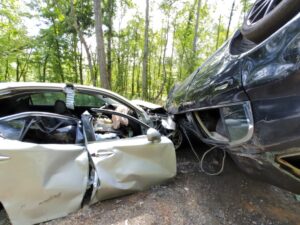 Every collision creates physical evidence that persists after the crash. Vehicle damage, roadway marks, and debris distribution all contain information about what happened. Skilled analysis of this evidence may establish facts that neither driver directly observed. The key is recognizing what types of evidence exist and preserving them before they disappear.
Vehicle Damage Patterns and Crush Analysis
The location, depth, and direction of vehicle damage reveal information about the collision. A front-corner impact indicates a different collision geometry than a direct frontal hit. The depth of crush relates to the forces involved, which connects to vehicle speeds.
Evidence that vehicle damage analysis may reveal includes:
- Which vehicle struck the other based on damage directionality
- Approximate speed at impact based on crush depth calculations
- Angle of collision indicating lane positions at impact
- Secondary impacts showing post-collision vehicle movements
- Height of damage suggesting the vehicle types involved
This analysis requires photographs taken before repairs and, ideally, physical inspection of the vehicles. Damage patterns provide objective data independent of driver accounts.
Roadway Marks and Gouge Patterns
Tire marks, scrapes, and gouges on the road surface document vehicle movements before, during, and after collision. Skid marks indicate braking. Yaw marks show vehicles rotating or sliding. Gouges from undercarriage contact mark the point of impact.
These marks fade over time. Rain, traffic, and road maintenance gradually erase them. Photographs and measurements taken promptly after the crash preserve this evidence before it disappears. Police reports sometimes include diagrams noting roadway marks, though independent documentation strengthens the record.
Debris Field Analysis
Broken glass, plastic fragments, and vehicle parts scatter across the roadway during a collision. The distribution of this debris indicates where the impact occurred and how vehicles moved afterward. Debris fields provide reference points for mapping the collision sequence.
Forensic analysis of debris distribution may establish:
- The point of impact within the roadway
- The direction each vehicle traveled before the collision
- Post-impact movement and final rest positions
- Whether vehicles remained in their lanes or crossed centerlines
- Sequence of events in multi-vehicle crashes
This evidence exists at the scene immediately after the crash but may be cleared quickly for traffic safety. Photographs documenting debris before cleanup preserve this information.
The Role of Accident Reconstruction
Accident reconstruction applies physics and engineering principles to determine what happened during a collision. Reconstruction professionals analyze physical evidence, vehicle specifications, and roadway conditions to develop opinions about speed, direction, and fault.
Courts throughout New Jersey routinely accept accident reconstruction testimony when it meets evidentiary standards and is supported by reliable methods.
How Reconstruction Analysis Works
Reconstruction begins with gathering available evidence: photographs, vehicle damage documentation, roadway measurements, and any electronic data from the vehicles. The professional then applies established formulas and engineering principles to analyze this information.
Speed calculations may use crush depth, skid mark length, or momentum transfer principles. Direction of travel comes from damage angles and roadway marks. Point of impact is established through debris location and gouge marks. Each element builds toward a comprehensive picture of the collision sequence.
What Reconstruction May and May Not Establish
Reconstruction provides scientific analysis, not certainty. Professionals develop opinions based on available evidence and established principles. Courts evaluate this testimony alongside other evidence in the case.
Reconstruction analysis may support conclusions about which vehicle crossed the centerline, whether a driver braked before impact, and how fast vehicles traveled. It may not definitively resolve every disputed fact, particularly when physical evidence is limited or ambiguous.
The value of reconstruction lies in providing objective, science-based analysis that goes beyond competing driver accounts. When two drivers offer conflicting versions, physical evidence and reconstruction may support one version over the other.
Electronic Evidence From Modern Vehicles
 Many vehicles manufactured in recent years contain electronic systems that record data about speed, braking, and other parameters. This data may provide crucial evidence in rural crashes where traditional witnesses are unavailable.
The challenge lies in identifying, preserving, and accessing this information before it disappears.
Event Data Recorders in Passenger Vehicles
Event Data Recorders (EDRs), sometimes called vehicle “black boxes,” capture information in the seconds before and during a crash. Many modern vehicles contain these systems, though data availability and accessibility vary by manufacturer and model year.
EDR data may include:
- Vehicle speed in the seconds before impact
- Brake application timing and intensity
- Throttle position indicating acceleration
- Steering input showing driver actions
- Seatbelt status and airbag deployment
This data provides objective information about vehicle operation regardless of whether anyone witnessed the crash. Accessing it requires specialized equipment and must occur before the vehicle is repaired, sold, or scrapped.
Preservation Requests and Data Access
EDR data may be overwritten or lost if it is not preserved promptly. Sending a written preservation request to the other driver’s insurance company creates a record that the data existed and demanded retention. Failure to preserve evidence after receiving such a request may support spoliation arguments, depending on how a court evaluates the circumstances. Spoliation refers to the destruction or loss of relevant evidence.
Accessing data from the other vehicle typically requires consent, a court order, or litigation discovery. The process takes time, making early preservation requests important even before a lawsuit is filed.
When “My Word Against Theirs” Becomes Something More
The fear that a case will come down to competing driver statements overlooks how evidence actually works. Physical facts do not change based on who tells a more convincing story. When damage patterns, roadway marks, and electronic data support one version of events, that consistency strengthens the claim regardless of witness availability.
Insurance adjusters and courts evaluate the totality of evidence, not just driver accounts.
Consistency Between Physical Evidence and Driver Accounts
A driver’s account gains credibility when physical evidence supports it. If a driver says the other vehicle crossed the centerline and damage patterns plus roadway marks confirm that sequence, the physical evidence corroborates the testimony. Inconsistency between a driver’s account and physical evidence raises credibility questions.
This is why preserving physical evidence matters so much in rural crashes. The evidence that supports your account may be the most powerful tool for fighting for fair compensation when no witnesses observed what happened.
How Insurance Companies Evaluate Low-Evidence Claims
Insurance adjusters assess claims based on available evidence. In rural crashes, they examine police reports, vehicle damage, and any electronic data. They also consider the consistency of each driver’s account with the physical evidence.
Adjusters may initially take positions that favor their insured when evidence appears limited. Organized physical evidence and professional analysis may change that calculation. Claims that initially seem like credibility contests may resolve differently once reconstruction or damage analysis enters the picture.
Documenting a Rural Crash Scene
Evidence preservation begins immediately after a crash, though injured drivers often focus on medical needs rather than documentation. When possible, photographs and notes taken at the scene preserve information that may otherwise disappear. Even limited documentation helps establish conditions that support later analysis.
Photographs That Matter Most
Scene photographs serve multiple purposes. They document vehicle positions, damage, roadway conditions, and environmental factors like lighting and weather. Each photograph may become relevant during claim evaluation or litigation.
Priority photographs for rural crash documentation include:
- Overall scene showing roadway layout and vehicle positions
- Close-up images of damage to all vehicles involved
- Roadway marks, including skid marks, gouges, and scrapes
- Debris distribution before cleanup
- Lighting conditions, signage, and road surface condition
Taking multiple photographs from different angles provides flexibility during later analysis. Even smartphone photographs preserve valuable information when higher-quality documentation is not immediately available.
When Professional Documentation Becomes Necessary
Some rural crashes warrant professional scene documentation by investigators or reconstruction professionals. Serious injuries, disputed liability, and complex collision dynamics all suggest that detailed analysis may become important.
Professional documentation typically includes measurements, scaled diagrams, and systematic photography. This level of detail supports more precise reconstruction analysis than casual photographs alone. The decision to engage professional documentation depends on case circumstances and the stakes involved.
FAQ for Rural Road Accident Claims
What if the police report is incomplete or inaccurate?
Police reports may contain errors or omissions, particularly in rural crashes where officers arrive after vehicles have moved. These reports are not binding on civil claims. Independent evidence, including photographs, reconstruction analysis, and witness testimony, may contradict or supplement police conclusions.
How long do roadway marks typically last after a crash?
Duration varies based on weather, traffic volume, and road maintenance. Heavy rain may wash away marks within hours. Light traffic on rural roads may preserve them for days or weeks. Documenting marks promptly after the crash protects against evidence loss regardless of actual duration.
Do dashcams help in rural accident claims?
Dashcam footage provides direct evidence of the collision sequence when available. Even partial footage showing the moments before impact may establish speed, lane position, and the other vehicle’s movements. Dashcams in either vehicle involved may contain relevant evidence.
What if the other driver left the scene before anyone arrived?
Hit-and-run crashes on rural roads present additional challenges, but physical evidence may still identify the other vehicle. Paint transfer, debris from the fleeing vehicle, and damage patterns narrow the search. Reporting the crash promptly helps law enforcement investigate while evidence remains fresh.
How does poor road maintenance affect liability?
Dangerous road conditions like potholes, missing signage, or inadequate maintenance may shift some responsibility to the government entity responsible for the road. These claims involve additional procedural requirements under the New Jersey Tort Claims Act, including shorter deadlines for providing formal notice of a claim before a lawsuit may proceed.
When the Road Offers No Witnesses, Science Fills the Gap

Richard Grungo Jr., Esq., Personal Injury Lawyer
Rural crashes in Cumberland County often leave injured drivers feeling isolated and uncertain. The absence of cameras and witnesses creates anxiety about whether anyone outside the two vehicles involved may ever know what really happened. That uncertainty, while understandable, overlooks the evidence that physics leaves behind.
Personal injury lawyers at Grungo Law represent injured drivers throughout Vineland and Cumberland County who face these exact concerns. Our team works with reconstruction professionals, analyzes vehicle damage, and gathers the physical evidence that supports claims even when no one saw the crash occur. We fight for fair compensation based on facts and science, not just competing stories.
If a rural road crash left you injured and uncertain about your options, contact Grungo Law for a free consultation. We handle these claims on a contingency basis, which means you owe no attorney fees unless we recover compensation for you.