


Landis Avenue and Delsea Drive: Proving Negligence on Vineland’s Main Arteries
Request a Free ConsultationVineland car accident lawyers frequently handle claims from two corridors that locals know all too well. Landis Avenue runs east to west through Vineland’s primary commercial corridor, while Delsea Drive (Route 47) cuts north to south with higher speeds and longer straightaways. Both roads see frequent crashes, but the negligence arguments differ depending on which corridor the collision occurred.
Drivers injured on these roads often hear that the crash was “just traffic” or “unavoidable.” Insurance adjusters treat Landis Avenue rear-end collisions and Delsea Drive high-speed impacts as routine events rather than preventable incidents caused by careless driving. The legal reality differs from that framing. When a driver fails to yield from a business driveway or speeds through a congested area, that conduct may support a negligence claim regardless of how common such crashes have become.
Key Takeaways for Landis Avenue and Delsea Drive Accident Claims
- Different roads create different negligence theories, with Landis Avenue claims often involving failure to yield while Delsea Drive crashes frequently stem from excessive speed.
- New Jersey’s modified comparative fault rule under N.J.S.A. 2A:15-5.1 allows recovery as long as your fault does not exceed 50 percent, with damages reduced by your share of responsibility.
- Drivers who know or reasonably should know about recurring hazards must adjust their behavior, and failure to do so may support negligence arguments when crashes occur.
- Physical evidence like vehicle damage patterns and surveillance footage often reveals whether a driver was speeding, following too closely, or failed to check traffic before entering the roadway.
- The two-year statute of limitations for New Jersey personal injury claims creates a deadline, though gathering evidence promptly helps build stronger cases.
How Two Corridors Create Two Different Types of Claims
Landis Avenue and Delsea Drive both carry heavy traffic through Vineland, but the crashes that occur on each road follow distinct patterns. Landis Avenue’s commercial strip creates stop-and-go conditions where vehicles constantly enter and exit business driveways. Delsea Drive’s design encourages higher speeds on long straightaways, leading to more severe impacts when collisions occur.
These differences matter because negligence claims require connecting specific driver conduct to the crash. The same legal principles apply, but the evidence and arguments shift depending on which road was involved.
Landis Avenue: Commercial Driveways and Failure to Yield
Landis Avenue between Main Road and Delsea Drive passes dozens of strip malls, shopping plazas, and individual businesses. Drivers entering the roadway from these locations must yield to through traffic under N.J.S.A. 39:4-66. When they misjudge gaps or pull out without adequately checking traffic, collisions result.
These crashes often happen because drivers grow impatient waiting for openings in heavy traffic. They accept gaps that leave insufficient time for acceleration, forcing through-traffic to brake suddenly or swerve. The driver who failed to yield typically bears responsibility, though insurance companies sometimes argue that the through-driver was speeding or could have avoided the collision.
Delsea Drive: Speed and Straightaway Severity
Route 47 through Vineland features stretches where the road opens up and drivers accelerate well beyond posted limits. The long sightlines create a false sense of security. When crashes occur at these speeds, the forces involved produce more severe injuries than typical urban collisions.
Negligence claims on Delsea Drive often focus on whether the at-fault driver maintained a reasonable speed for the conditions. Posted speed limits establish a baseline, but New Jersey law requires drivers to reduce speed when traffic, weather, or road conditions demand it. A driver traveling at the posted limit during rush hour congestion may still be negligent if that speed was unreasonable given the circumstances.
Why Driver Awareness of Road Conditions Matters Legally
 Local drivers often express frustration about Landis Avenue and Delsea Drive with phrases like “everyone knows how bad that intersection is” or “people fly down Route 47.” While a road’s general reputation is not itself evidence of negligence, driver awareness of specific conditions carries legal significance that many injured drivers do not initially recognize.
New Jersey negligence law considers what a reasonable driver would do under the circumstances. When a driver knows or reasonably should know that a road presents particular hazards, the duty of care requires appropriate adjustments to speed, following distance, and attention.
The Duty to Adjust Behavior Based on Known Conditions
A driver who regularly commutes on Delsea Drive knows that traffic backs up near certain intersections during rush hour. That same driver knows other motorists sometimes speed on the straightaways between traffic signals. This knowledge creates an obligation to drive defensively, maintain safe following distances, and avoid contributing to the very dangers the driver recognizes.
The argument works both ways. An at-fault driver who claims the crash was “unavoidable” faces a tougher position when evidence shows they regularly drove that route and knew its hazards. Familiarity with dangerous conditions makes aggressive driving less defensible, not more.
How Specific Conduct Connects to Fault
Insurance adjusters sometimes argue that crashes on busy commercial roads are inherent risks that no one truly caused. This framing ignores the specific conduct that led to the collision. A rear-end crash on Landis Avenue happened because one driver followed too closely or was not paying attention, not because traffic exists.
Negligence claims focus on particular actions: Did the driver check traffic before pulling out? Did they maintain a safe following distance? Did they adjust speed for congestion? When a driver ignores conditions they knew about and causes a collision through specific careless conduct, the negligence case becomes stronger.
Evidence That Connects Driver Conduct to the Crash
Negligence claims require more than showing that a crash occurred. The injured person must connect specific conduct by the at-fault driver to the collision and resulting injuries. On Landis Avenue and Delsea Drive, certain types of evidence prove particularly valuable.
Physical evidence, witness accounts, and electronic data all contribute to establishing what happened and why.
Vehicle Damage Patterns and Impact Analysis
The location and severity of vehicle damage tells a story about how the crash occurred. Rear-end collisions leave damage concentrated at the back of the struck vehicle, while side-impact crashes create damage patterns indicating the angle of collision.
Evidence that damage analysis may reveal includes:
- Impact angle suggesting the at-fault vehicle entered the roadway without yielding
- Damage severity indicating speed at the time of collision
- Secondary impacts showing the struck vehicle was pushed into other objects
- Underride patterns suggesting height mismatches between vehicles
Accident reconstruction experts sometimes use this physical evidence to calculate speeds and determine fault when witness accounts conflict.
Surveillance Footage From Nearby Businesses
Landis Avenue’s commercial character means many crashes occur within view of business security cameras. Strip malls, gas stations, and retail stores often have exterior cameras covering parking lots and adjacent roadways. This footage may capture the moments before and during a collision.
Obtaining surveillance footage requires prompt action. Many systems overwrite recordings within days or weeks. A preservation letter sent to nearby businesses shortly after the crash helps prevent loss of this evidence. The footage may show whether the at-fault driver checked traffic before entering the roadway or was traveling at excessive speed.
Witness Testimony From Other Drivers
Busy commercial corridors mean other drivers often witness crashes or observe dangerous driving behavior immediately before collisions occur. Witnesses may have seen the at-fault driver tailgating, speeding, or pulling out of a driveway without looking.
Witness contact information becomes unavailable quickly after crashes. Police reports sometimes include witness names, but officers do not always identify every person who observed the incident. Gathering witness information at the scene, when possible, preserves access to testimony that may prove valuable later.
Rear-End Collisions on Landis Avenue: Not as Simple as They Seem
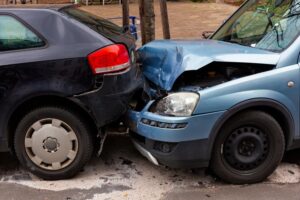 Rear-end crashes on commercial corridors like Landis Avenue might seem straightforward. The following driver hit the lead vehicle from behind, suggesting the following driver was at fault. Insurance companies sometimes complicate this analysis by arguing that the lead driver stopped suddenly or erratically.
New Jersey law requires drivers to maintain a following distance that allows them to stop safely if the vehicle ahead brakes. This duty exists regardless of why the lead vehicle stopped.
Following Distance Under New Jersey Law
N.J.S.A. 39:4-89 prohibits following another vehicle more closely than is reasonable and prudent, considering the speed of the vehicles, traffic conditions, and the condition of the roadway. On congested commercial roads like Landis Avenue, this statute demands greater following distances than on open highways.
Stop-and-go traffic near shopping plazas means drivers must anticipate sudden stops. A vehicle braking for a pedestrian, a car pulling out of a driveway, or traffic backing up from a signal all create situations where the following driver must stop quickly. Failure to maintain adequate following distance makes these rear-end collisions the following driver’s responsibility.
When Lead Driver Conduct Becomes Relevant
In limited circumstances, the lead driver’s conduct may contribute to a rear-end collision. A driver who reverses suddenly, stops in a travel lane without hazard lights while traffic flows around them, or engages in other unexpected maneuvers may share some fault.
However, these arguments rarely eliminate the following driver’s responsibility entirely. The following driver still had a duty to maintain a safe distance and remain alert to conditions ahead. Comparative fault may reduce the recovery, but it typically does not defeat the claim.
High-Speed Crashes on Delsea Drive: Severity and Negligence
Route 47’s design encourages speeds that feel appropriate on open highways but become dangerous when traffic conditions change. The long straightaways between Vineland’s commercial areas create transitions between high-speed travel and congested intersections. Drivers who fail to adjust create serious collision risks.
Speed as Evidence of Negligence
Exceeding the posted speed limit is strong evidence of negligence that courts and juries may consider when determining fault. When a driver travels faster than the limit and causes a crash, the violation supports the injured person’s negligence claim, though it does not automatically decide the issue. The factfinder still evaluates all circumstances surrounding the crash.
Even when a driver travels at or below the posted limit, speed may still support negligence arguments. Posted limits reflect general conditions, not specific circumstances at any given moment. A driver traveling 50 miles per hour in a 50-mile-per-hour zone during heavy traffic, poor weather, or near a congested intersection may be negligent despite technical compliance with the limit.
Electronic Data That Reveals Pre-Crash Speed
Modern vehicles contain electronic systems that record data about speed, braking, and other parameters. The Event Data Recorder (EDR), sometimes called a vehicle’s “black box,” captures information in the seconds before and during a crash.
EDR data may reveal:
- Vehicle speed immediately before impact
- Whether and when the driver applied the brakes
- Throttle position indicating acceleration or deceleration
- Seatbelt usage and airbag deployment timing
Accessing this data requires specialized equipment and expertise. Preservation requests sent to the at-fault driver’s insurance company help prevent data loss or vehicle disposal before extraction occurs.
How a Vineland Car Accident Lawyer Builds These Claims
 Building a negligence case on Landis Avenue or Delsea Drive requires connecting driver conduct to the crash through admissible evidence. Insurance companies have resources and experience defending these claims. Injured drivers benefit from having someone who understands both the legal requirements and the local road conditions working on their behalf.
The process involves evidence gathering, investigation, and presentation of the facts in a way that supports recovery.
Investigating the Scene and Gathering Documentation
Crash investigation begins with the scene itself. Photographs, measurements, and documentation of conditions help establish what happened. Traffic signal timing, sight distances from business driveways, and road surface conditions all may prove relevant.
Investigation typically includes:
- Obtaining the police crash report and any witness statements
- Photographing vehicle damage, road conditions, and intersection layout
- Identifying and contacting businesses with potential surveillance footage
- Gathering weather data and traffic information for the date and time
- Reviewing the at-fault driver’s history if relevant to the claim
This documentation creates the foundation for establishing how the crash occurred and who bears responsibility.
Presenting Evidence That Supports Fair Compensation
Medical records, wage documentation, and evidence of other losses translate injuries into damages claims. The connection between the crash, the injuries, and the resulting harms must be clear and supported by documentation.
A strong presentation addresses insurance company arguments before they derail the claim. When adjusters suggest the crash was unavoidable or that the injured person shares significant fault, evidence and legal arguments counter those positions. This approach helps fight for fair compensation rather than accepting whatever the insurance company initially offers.
FAQ for Landis Avenue and Delsea Drive Accident Claims
How does a crash at a business driveway differ from one at a traffic signal?
Driveway crashes typically involve failure-to-yield arguments under statutes that place responsibility on the entering driver. Signal-controlled intersection crashes may involve questions about which driver had the green light and whether either driver entered on yellow or red. Traffic camera footage and witness testimony become particularly important at signalized intersections.
What if the other driver claims I was speeding too?
Comparative fault arguments require evidence, not just accusations. If the at-fault driver claims you were speeding, they bear the burden of supporting that claim. EDR data from your vehicle, lack of skid marks, and witness testimony may refute unfounded speed allegations.
Does road construction or poor signage affect negligence claims?
Temporary construction conditions or inadequate signage may shift some responsibility to the government entity or contractor responsible for the work zone. These claims involve additional procedural requirements, including shorter notice deadlines under the New Jersey Tort Claims Act. The primary at-fault driver typically remains responsible, but additional parties may share liability.
How long do businesses keep surveillance footage?
Retention periods vary widely. Some systems overwrite within 24 to 72 hours. Others retain footage for 30 days or longer. Sending a written preservation request immediately after the crash creates documentation that the business was on notice not to destroy relevant evidence.
What if my crash involved a commercial vehicle or delivery truck?
Commercial vehicle crashes on Landis Avenue and Delsea Drive may involve additional liable parties, including the trucking company or the company that hired the delivery service. Federal and state regulations govern commercial driver conduct, and violations may support negligence claims. These cases often require investigation into driver logs, vehicle maintenance, and company policies.
When a Routine Commute Turns Into a Legal Claim
Richard Grungo Jr., Esq., Personal Injury Lawyer
Vineland residents drive Landis Avenue and Delsea Drive so often that crashes on these roads feel almost inevitable. That familiarity sometimes leads injured drivers to accept insurance company positions that undervalue legitimate negligence claims. The fact that a road sees frequent crashes does not make any particular collision acceptable or uncompensable.
Personal injury lawyers at Grungo Law represent injured drivers throughout Vineland and Cumberland County who need someone to investigate their crashes, gather evidence, and fight for fair compensation. Our team knows these roads, understands the patterns that cause collisions, and recognizes when insurance adjusters are minimizing legitimate claims.
If you were injured on Landis Avenue, Delsea Drive, or another busy Vineland corridor, contact Grungo Law for a free consultation. We handle car accident cases on a contingency basis, which means no attorney fees unless we recover compensation for you.