


Pennsylvania’s “Hills and Ridges” Doctrine: Proving a Slip and Fall on Philly Ice
Request a Free ConsultationPennsylvania law treats ice and snow differently than other hazardous conditions. The “hills and ridges” doctrine creates requirements that do not apply to typical slip and fall cases, and many injured people learn about these requirements only after an insurer denies their claim.
The doctrine exists to protect property owners from liability for general icy conditions during and immediately after winter storms. Pennsylvania courts have long recognized that expecting property owners to keep walkways completely clear during active snowfall is unreasonable. This protection for property owners means injured pedestrians must show more than simply that ice caused their fall.
Key Takeaways for Philadelphia Ice Slip and Fall Claims
- The hills and ridges doctrine requires proof that ice accumulated into ridges or elevations that unreasonably obstructed travel, not just that a surface was generally slippery.
- Property owners are not liable for naturally accumulated ice and snow during or immediately after a storm unless dangerous ridges or elevations have formed.
- The injured person must show the property owner had actual or constructive notice of the dangerous condition and failed to take reasonable corrective action.
- Pennsylvania’s two-year statute of limitations under 42 Pa.C.S. § 5524 applies to slip and fall claims, creating a deadline for filing personal injury lawsuits.
- Landlord responsibility depends on control over the area where the fall occurred, with different rules for common areas, private sidewalks, and city-owned walkways.
What the Hills and Ridges Doctrine Actually Means
Pennsylvania courts have applied the hills and ridges doctrine for decades as a long-standing rule for snow-and-ice slip and fall cases. Holding property owners liable for any icy surface during winter storms placed impossible demands on them. Courts created this doctrine to balance property owner duties against the reality of Pennsylvania winters. The doctrine limits when injured pedestrians may recover for ice-related falls.
The Legal Standard Explained
The hills and ridges doctrine requires an injured person to establish specific conditions before a property owner faces liability. General iciness is not enough. The ice must have accumulated into ridges or elevations of such size and character that they unreasonably obstruct travel and constitute a danger to pedestrians.
Courts often apply the hills and ridges doctrine when generally slippery conditions exist after winter weather. In those cases, a claim usually requires evidence of ridges or elevations, not just a slick surface. But if the ice is localized or caused by an unnatural condition like recurring runoff or drainage, the doctrine may not apply in the same way.
Why Pennsylvania Treats Ice Differently
The doctrine reflects Pennsylvania’s climate reality. Freeze-thaw cycles throughout winter make some ice accumulation inevitable. Requiring property owners to maintain perfectly clear walkways at all times during the winter months is impractical.
The rule protects property owners who act reasonably but cannot prevent all ice formation. It places responsibility on pedestrians to exercise care when walking during winter conditions. This balance tips heavily toward property owners, which is why ice claims face more obstacles than other premises liability cases.
What an Injured Person Must Show
 Ice slip and fall claims in Philadelphia require more than showing that ice caused the fall. The hills and ridges doctrine creates specific elements that the injured person must establish. Missing any element may defeat the claim regardless of how serious the injuries are.
Each element addresses a different aspect of the property owner’s responsibility.
Ridges or Elevations of Ice
The ice must have formed into ridges, bumps, or uneven accumulations. Generally slippery surfaces without distinct formations typically do not satisfy this requirement. The physical character of the ice matters because the doctrine specifically addresses dangerous formations, not general slipperiness.
Evidence that may help establish ridges or elevations includes:
- Photographs showing uneven ice accumulation taken shortly after the fall
- Witness descriptions of ice formations at the fall location
- Weather records showing freeze-thaw cycles that create uneven ice
- Measurements or comparisons indicating substantial ice depth variations
- Prior complaints about ice buildup at the same location
This physical evidence becomes critical because the injured person bears the burden of showing the ice met the doctrinal standard.
Unreasonable Obstruction to Travel
The ice formation must have unreasonably obstructed travel. Minor irregularities or slight accumulations that a careful pedestrian might navigate do not meet this standard. The obstruction must be substantial enough that it created a genuine hazard.
Courts evaluate this element based on the specific circumstances. A ridge that might be manageable in daylight may unreasonably obstruct travel in darkness. The location, visibility, and surrounding conditions all factor into whether the obstruction was unreasonable.
Notice to the Property Owner
The property owner must have had actual or constructive notice of the dangerous condition. Actual notice means the owner knew about the specific hazard. Constructive notice means the condition existed long enough that a reasonable owner exercising proper care would have discovered it.
This element often depends on timing. Ice that formed hours or days before the fall supports constructive notice arguments. Ice that formed shortly before the fall may not give the owner reasonable opportunity to discover and address it.
When the Doctrine May Not Apply
In some situations, the hills and ridges doctrine may not apply or may carry less weight, such as when a property condition like drainage or runoff creates or worsens the ice hazard. These circumstances address situations where the property owner’s conduct contributed to the danger rather than natural winter conditions alone.
Each situation requires specific factual circumstances.
Property Owner Actions That Create Danger
When a property owner’s conduct causes or contributes to dangerous ice formation, the hills and ridges doctrine may not provide protection. Negligent drainage that directs water onto walkways where it freezes creates a different situation than natural accumulation. Similarly, shoveling that leaves behind compacted ice or creates uneven surfaces may change the analysis.
Actions that may affect the doctrine’s application include:
- Defective downspouts or drainage that deposits water on walkways
- Shoveling or plowing that leaves dangerous ice ridges
- Application of insufficient salt that melts and refreezes into worse conditions
- Construction or design features that channel water to freezing locations
- Failure to repair known drainage problems that cause recurring ice
When the property owner’s actions contribute to the hazard, the natural accumulation protection may weaken or not apply.
Localized Unnatural Conditions
Ice that forms in unnatural patterns due to property conditions may fall outside the doctrine’s typical application. A persistent ice patch in one location caused by a leaking pipe differs from general winter ice. Recurring ice at a specific spot where roof runoff accumulates differs from area-wide conditions after a storm.
These localized hazards suggest the property owner had notice of a specific problem that required attention. The repeated nature of the condition undermines claims that the ice was simply natural accumulation.
Landlord Responsibility for Ice in Philadelphia
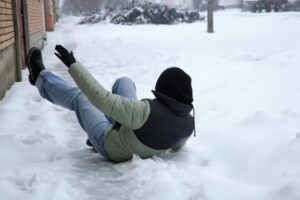 Philadelphia’s dense housing stock creates frequent questions about landlord duties regarding ice and snow. Rowhome sidewalks, apartment building entryways, and shared stairwells all present different legal considerations. The answer to who bears responsibility depends on where the fall occurred and who controlled that area. Landlord duties vary based on property type and lease arrangements.
Common Areas and Shared Spaces
Landlords typically bear responsibility for common areas that remain under their control. Apartment building stairwells, shared walkways, and building entrances fall into this category. When ice accumulates in these areas and forms dangerous ridges, the landlord may face liability if they had notice and failed to act.
Falls remain a leading cause of injury, particularly among older adults. Property owners who control common areas have duties to address known hazards within reasonable timeframes, though the hills and ridges analysis still applies to ice-related claims.
Private Sidewalks vs. City Property
Philadelphia Code § 10-720 requires owners, agents, or tenants to clear a path on sidewalks abutting their property within six hours after snow stops falling. That ordinance relates to duties and municipal enforcement, but civil liability still depends on the facts and the hills and ridges analysis.
City-owned property and public sidewalks may involve governmental immunity considerations that add additional complexity. Claims against the City of Philadelphia follow different procedural requirements than claims against private property owners.
Evidence That Matters in Ice Fall Cases
Ice cases require prompt evidence gathering because the hazardous condition literally melts away. Photographs taken days after a fall rarely capture the ice formation that caused it. Weather changes, property owner cleanup, and natural melting all destroy evidence that might support a claim.
Acting quickly to document conditions strengthens claims significantly.
Documenting the Ice Formation
Photographs taken immediately after the fall provide the most valuable evidence. Images showing ridges, uneven accumulation, or substantial ice buildup help establish the doctrinal elements. Multiple angles and close-up shots capture details that descriptions alone cannot convey.
When photographs are not available, other evidence may help establish conditions. Witness statements describing the ice, prior complaints to the property owner, and weather records all contribute to building the factual record.
Weather Records and Timing
Weather data from the National Weather Service helps establish when precipitation occurred and how conditions evolved. This information matters because the doctrine considers whether the property owner had reasonable time to address the accumulation after a storm ended.
Records showing that snow fell three days before the fall support arguments that the owner had time to clear dangerous ridges. Records showing active precipitation at the time of the fall may favor the property owner under the doctrine.
Why Insurance Companies Deny Ice Claims Quickly
Insurance adjusters sometimes deny ice slip and fall claims shortly after receiving them. The hills and ridges doctrine gives insurers a ready defense that does not require detailed investigation. A claim involving ice triggers an almost reflexive response citing the doctrine. This pattern does not mean all ice claims lack merit.
The Burden on Injured Pedestrians
The hills and ridges doctrine places the burden on injured pedestrians to establish each element. Insurance companies know that many injured people cannot gather sufficient evidence before conditions change. They also know that many people have never heard of the doctrine and do not understand what their claim requires.
Adjusters may deny claims without fully investigating whether the doctrine applies differently given the specific facts. A claim involving property owner conduct that created the hazard may be viable even when the adjuster cites the doctrine in their denial letter.
When Claims May Still Proceed
Some ice claims satisfy the doctrinal requirements or involve circumstances where the doctrine may not apply. Claims involving substantial ice ridges that existed for days, hazards created by property owner drainage problems, or localized conditions caused by building defects may all proceed.
Gathering evidence promptly and understanding the specific legal requirements helps identify which claims have potential. Not every ice fall produces a viable claim, but not every denial accurately reflects the claim’s merit either.
FAQ for Philadelphia Ice Slip and Fall Claims
Does the doctrine apply if I fell inside a building on tracked-in water?
Interior falls on water or slush tracked in from outside typically do not involve the hills and ridges doctrine. These claims follow standard premises liability rules. The property owner’s duty to address interior floor hazards differs from outdoor ice accumulation rules.
What if the property owner partially cleared the sidewalk but left ice behind?
Partial clearing that leaves dangerous ice ridges may affect how the doctrine applies because the property owner’s actions contributed to the hazard. The doctrine addresses liability for natural accumulation, and hazards created or worsened by the owner’s clearing efforts may be analyzed differently.
How does the doctrine apply to parking lots?
Parking lot falls generally follow the same hills and ridges analysis as sidewalk falls. Commercial property owners face the same doctrinal requirements. Evidence showing ridges or elevations, unreasonable obstruction, and notice all matter for parking lot claims.
What if I fell on ice from a roof that the owner failed to maintain?
Ice caused by roof drainage problems, clogged gutters, or defective downspouts may fall outside the natural accumulation analysis. When the property owner’s failure to maintain the building contributes to ice formation, the doctrine may not apply in the typical way.
Does it matter what time of day the fall occurred?
Time of day affects the analysis in several ways. Darkness may make ridges less visible, supporting arguments about unreasonable obstruction. Time also matters for notice calculations and whether the owner had reasonable opportunity to address conditions after precipitation ended.
When Winter Weather Leaves You Injured
Philadelphia winters bring freeze-thaw cycles that create icy conditions throughout the city. The hills and ridges doctrine makes these cases harder than other slip and fall claims, but harder does not mean impossible. Some ice falls produce viable claims when the evidence supports the specific requirements Pennsylvania law demands.
Personal injury lawyers at Grungo Law represent injured pedestrians throughout Philadelphia who need help evaluating whether their ice fall claim meets the legal standards. Our team gathers evidence promptly, analyzes whether the doctrine applies given the specific circumstances, and works to fight for fair compensation when property owner negligence caused the dangerous condition.
If an icy sidewalk, stairwell, or walkway left you injured and uncertain about your options, contact Grungo Law for a free consultation. We handle these claims on a contingency basis, which means you owe no attorney fees unless we recover compensation for you.