

What is the “Verbal Threshold” in NJ Car Accident Cases?
Request a Free ConsultationYou did everything right. You paid your car insurance premiums on time, every single month. You believed that in exchange for your money, you were buying protection and peace of mind. Then, another driver’s negligence turns your life upside down.
You are injured, in pain, and unable to work. You assume your policy, and the at-fault driver’s policy, will be there to make things right. Then you hear the words from an insurance adjuster, maybe even your own: “You have the ‘limitation on lawsuit’ option.” A South Jersey car accident lawyer can help you understand what this means, how it affects your right to sue, and what steps you can take to still pursue fair compensation.
Suddenly, you are told that despite your injuries, despite the other driver’s clear fault, your right to sue for the full measure of your pain and suffering is restricted by a choice you probably made years ago to save a few dollars on your premium. It feels like a betrayal.
This contractual fine print, often called the verbal threshold, is the single biggest obstacle to justice for car accident victims in New Jersey. It is a legal wall designed by insurance companies, and they will use it to deny you fair compensation.
Key takeaways
- The “Verbal Threshold,” or “Limitation on Lawsuit,” is an option on your New Jersey auto insurance policy that severely restricts your right to sue a negligent driver for pain and suffering damages.
- To overcome this limitation, your injury must fall into one of six specific categories defined by state law, such as a displaced fracture or a permanent injury.
- The insurance company will aggressively fight to prove your injury does not meet one of these six criteria, making objective medical evidence and legal advocacy essential.
- Even if you have the verbal threshold, certain exceptions, like being hit by a commercial truck or a drunk driver, may allow you to bypass the limitation entirely.
The Trade-Off You Never Knew You Made

When you purchase auto insurance in New Jersey, you must make a choice. This choice has a profound impact on your legal rights after an accident. What you need to know is that you must select either the “Limitation on Lawsuit” option or the “No Limitation on Lawsuit” option.
The “limitation on lawsuit” option (verbal threshold)
This is the default and less expensive option, and it is the one most New Jersey drivers have. By selecting it, you agree to give up your right to sue a negligent driver for non-economic damages, commonly known as pain and suffering, unless your injury is severe enough to meet a specific legal standard.
Your insurance company gives you a small discount on your premiums, but in exchange, you give up significant legal rights.
The “no limitation on lawsuit” option (zero threshold)
This option is more expensive, but it preserves your rights. If you have this coverage, you can pursue a claim for pain and suffering for any injury you sustain in an accident caused by someone else, regardless of its severity. There is no legal threshold to overcome.
The official New Jersey Division of Banking and Insurance provides a buyer’s guide that outlines these choices, but the true legal and financial consequences of the verbal threshold are often not clear until it is too late.
The Six Gateways to Justice: Piercing the Verbal Threshold
If you have the verbal threshold on your policy, the courthouse doors are effectively closed to your pain and suffering claim unless we can prove your injury fits into one of six specific categories defined by law. Laws in New Jersey determine these categories and how they apply to your case.
The insurance company’s entire defense will be focused on arguing that your injury, no matter how painful or disruptive, does not qualify.
1. Death
This is the most straightforward and tragic category. If an accident results in a person’s death, the surviving family members can bring a wrongful death claim to seek compensation for their profound loss, and the verbal threshold does not apply.
2. Dismemberment
This category applies when an accident victim loses a limb or another significant body part. This includes the amputation of an arm, leg, hand, or foot. The loss is permanent and catastrophic, and the law allows for a full recovery for the immense suffering this causes.
3. Significant disfigurement or significant scarring
This category is more subjective and, therefore, more frequently disputed by insurance companies. It applies to scarring or disfigurement that has a major effect on a person’s appearance.
The keyword is “significant.” A small, faded scar may not qualify, but a prominent scar on the face, neck, or arms, or severe scarring from “road rash” or surgery, often will.
4. Displaced fracture
This is another objective and powerful category. A displaced fracture is a broken bone where the two ends have been knocked out of alignment. Know your rights because this type of injury is more severe than a simple or hairline fracture. It often requires a doctor to physically reset the bone and immobilize it with a cast, and in many cases, it requires surgery to install plates, screws, or rods.
5. Loss of a fetus
If a pregnant person is involved in a car accident that results in a miscarriage, this tragic loss is recognized as a specific category that pierces the verbal threshold. It allows the family to seek compensation for their devastating emotional and physical trauma.
6. A permanent injury
This is the most common, most important, and most fiercely contested of the six categories. A “permanent injury” is defined under the law as a body part or organ that has not healed to function normally and will not heal to function normally with further medical treatment.
This is the battleground for the majority of verbal threshold cases. It applies to the common and debilitating injuries seen in car accidents, such as:
- Herniated discs in the neck or back that cause chronic pain and nerve impingement.
- Torn ligaments or tendons, such as a rotator cuff tear in the shoulder or an ACL tear in the knee.
- Nerve damage that results in permanent numbness, weakness, or radiculopathy.
The insurance company’s entire strategy will be to argue that your injury is not permanent. They will call it a simple “sprain” or “strain” that will eventually heal, even if you are still in pain years later. Proving permanency is a complex medical and legal challenge.
The Battle Over “Permanency”: How We Win
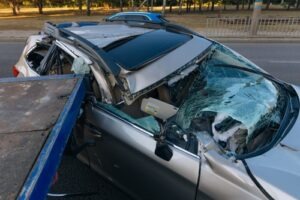
Because the “permanent injury” category is the most common path to recovery, New Jersey law has created a specific procedural hurdle you must clear. Personal injury law requires that you cannot simply claim your injury is permanent; your lawyer must prove it with objective medical evidence.
The certification of permanency
To proceed with a lawsuit based on a permanent injury, your attorney must obtain and file a “Certification of Permanency” with the court. This is a sworn statement, signed by your treating physician under penalty of perjury, that states their professional opinion that your injury is permanent within the meaning of the law.
This certification must be based on “objective, credible medical evidence.”
“Objective evidence” means proof that is not just based on your subjective complaints of pain. It means things a doctor can see and measure.
We build a case for permanency with powerful, objective proof. This includes:
- MRI and CT Scans: These imaging studies can visually show a herniated disc, a torn ligament, or other structural damage.
- EMG/NCS Testing: These tests measure nerve function and can objectively document nerve damage or radiculopathy.
- Reports from Medical Specialists: We work with your orthopedic surgeons, neurologists, and other specialists to create detailed medical reports that explain the nature of your injury and why it is permanent.
The insurance company will counter with their own doctor, a hired gun who will examine you for 15 minutes and write a report claiming you have made a full recovery.
We fight these “independent” medical examinations by exposing the bias of the doctors and by presenting the superior, credible evidence from your own long-term treating physicians.
Important Exceptions That Can Bypass the Verbal Threshold
Even if your injury does not clearly fall into one of the six categories, you may still be able to pursue a full claim for pain and suffering. Damages available under these exceptions can provide full compensation beyond the verbal threshold rule.
If your accident falls into one of these categories, the limitation on your policy does not apply.
Accidents involving commercial vehicles
This is a critical exception. If you are injured in an accident with a vehicle that is being used for business purposes, the verbal threshold does not apply. This includes crashes with:
- Commercial trucks, tractor-trailers, and semi-trucks
- Delivery vans (Amazon, FedEx, UPS)
- Construction vehicles
- Taxis and limousines
- Any vehicle owned by a business
Accidents caused by a drunk driver
If the driver who hit you is convicted of or pleads guilty to driving while intoxicated (DWI), the verbal threshold does not apply. This public policy exception ensures that victims of these reckless acts have an unrestricted right to seek full compensation.
Accidents involving out-of-state vehicles
If the vehicle that caused your accident is registered in another state, the verbal threshold does not apply. This is a common scenario on New Jersey’s major highways like the Turnpike and I-295.
Other key exceptions
The law provides other pathways around the verbal threshold. The limitation does not apply if the person who hit you was driving without insurance, intentionally caused the accident, or if you were a pedestrian or bicyclist injured in the crash. FAQs in New Jersey often address these exceptions and how they affect your ability to seek compensation.
We analyze the specific facts of your case to identify every possible exception that can free you from the restrictions of your own policy.
FAQ for New Jersey’s Verbal Threshold
Can the insurance company make me see their doctor?
Yes. If you file a lawsuit, the insurance company has the right to have you examined by a doctor of their choosing. This is called an “Independent” Medical Examination (IME), but these doctors are paid by the insurance company and almost always write reports that favor the defense. We prepare our clients for these exams and know how to challenge the biased opinions of these hired gun doctors in court.
My doctor says my injury is serious, but is hesitant to sign the Certification of Permanency. What can I do?
Some doctors are unfamiliar with the legal requirements or are reluctant to get involved in litigation. We can communicate directly with your doctor to explain the legal standard and provide them with the objective evidence from your file that supports a finding of permanency. If necessary, we can refer you to a respected specialist for a second opinion.
I was a passenger in someone else’s car. Does their verbal threshold apply to me?
Yes. As a passenger, you are subject to the verbal threshold choice made on your own auto insurance policy. If you do not have your own policy, you are subject to the policy of a resident relative. If you have no policy in your household, you are not subject to the verbal threshold. It is a complex analysis that we can walk you through.
You Need an Advocate to Break Through the Wall
 The verbal threshold is a legal and contractual wall built by the insurance industry to protect their profits. Trying to overcome it on your own is what they want you to do.
They will deny, delay, and dispute your claim until you either give up or accept a settlement that is a fraction of what you truly need. A skilled personal injury law firm knows how to dismantle that wall, brick by brick, with objective evidence and powerful legal arguments.
We build a case so strong that the insurance company can no longer hide behind the fine print of your policy. Do not let your choice on an insurance form years ago determine your future.
If you have been injured in a car accident and are being told the verbal threshold limits your rights, contact Grungo Law for a free consultation. We can review your policy, evaluate your injuries, and show you the path to the full and fair compensation you need to recover.
Call our Cherry Hill office today at (856) 548-8347 or complete our online contact form.